The plateau most athletes hit isn't a training problem.
Strength stops responding to load. Speed stops responding to drills. Recovery takes a day longer than it should. The instinct is to add volume, change the program, or cut nutrition harder. Sometimes that works. Often it doesn't, because the limiter isn't on the input side. It's on the signal side.
Performance is a downstream output of how clearly your brain can talk to your body.
What the signal actually does
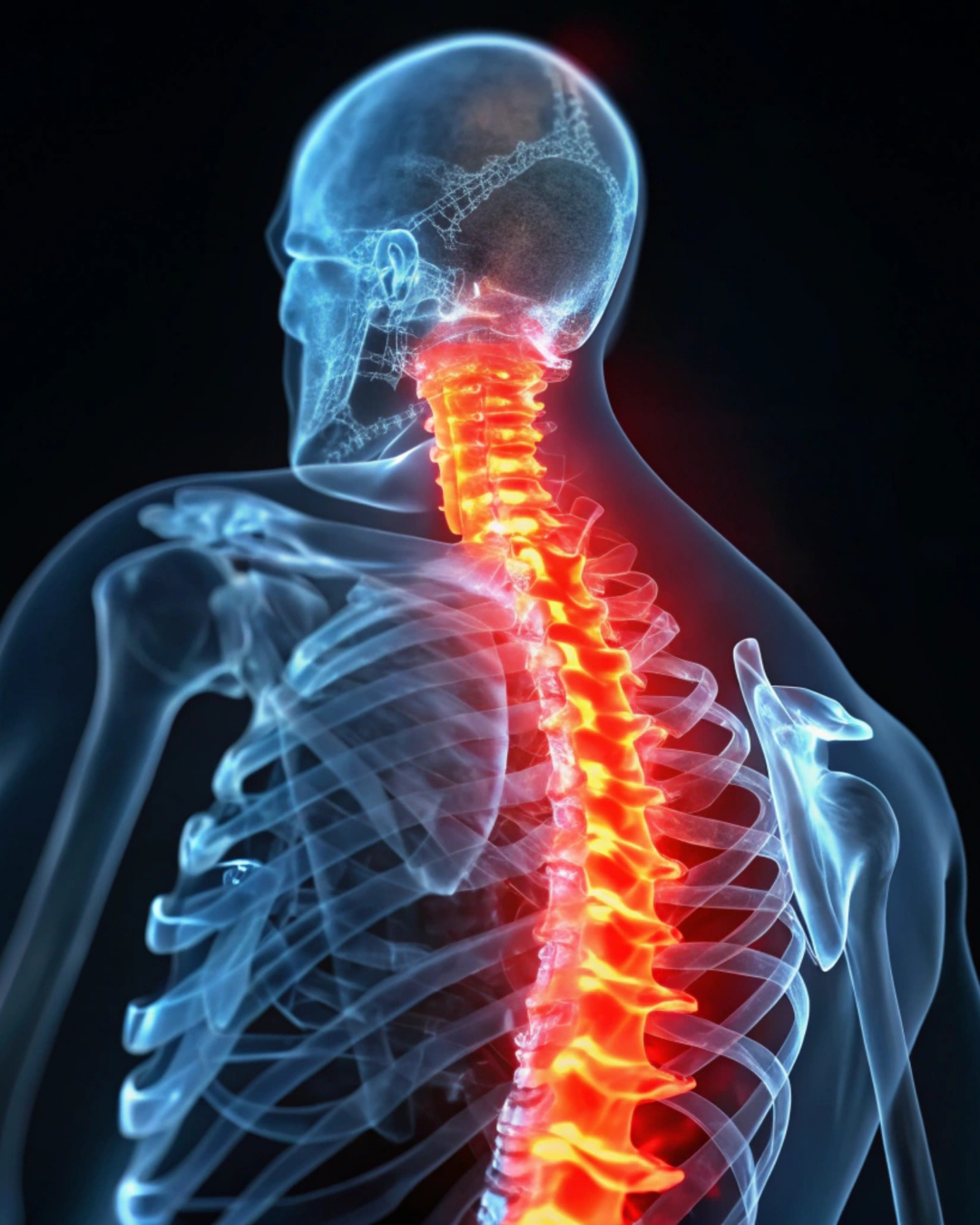
Every athletic action is a chain. A decision in the cortex becomes a motor program in the brainstem and cerebellum, becomes a signal down the spine, becomes a recruitment pattern across motor units, becomes force.
The chain has multiple points where signal can degrade:
- Motor unit recruitment. Strength isn't only about muscle mass. It's about how many fibers the nervous system can synchronize at the moment of demand. Untrained systems recruit fewer fibers than trained ones; dysregulated systems recruit fewer than well-regulated ones at the same training age.
- Proprioception. Your brain's real-time model of where the body is in space. Joints, muscles, fascia, and the upper cervical spine all feed this model. When the input is distorted, balance, coordination, and timing all degrade subtly.
- Reaction time. The interval between stimulus and motor response. Limited by signal speed through the spine and by how rapidly the autonomic system can pivot.
- Autonomic recovery. The pace at which your nervous system returns to parasympathetic dominance after a training stimulus. Slow recovery means stacked stress, blunted adaptation, and a higher injury risk.
When any of these degrade, the output you feel is "I'm working harder for the same result."
Where the bottleneck shows up
Signs the limiter is signal quality, not effort:
- Strength gains slow even with consistent progressive overload
- Recovery takes longer than it used to, even when sleep and nutrition are dialed
- Small injuries you used to shake off start to linger
- Reaction time on the field or in the gym feels off in ways you can't quite name
- Workouts that used to charge you up now drain you
- HRV trends are flat or declining despite training that should be building capacity
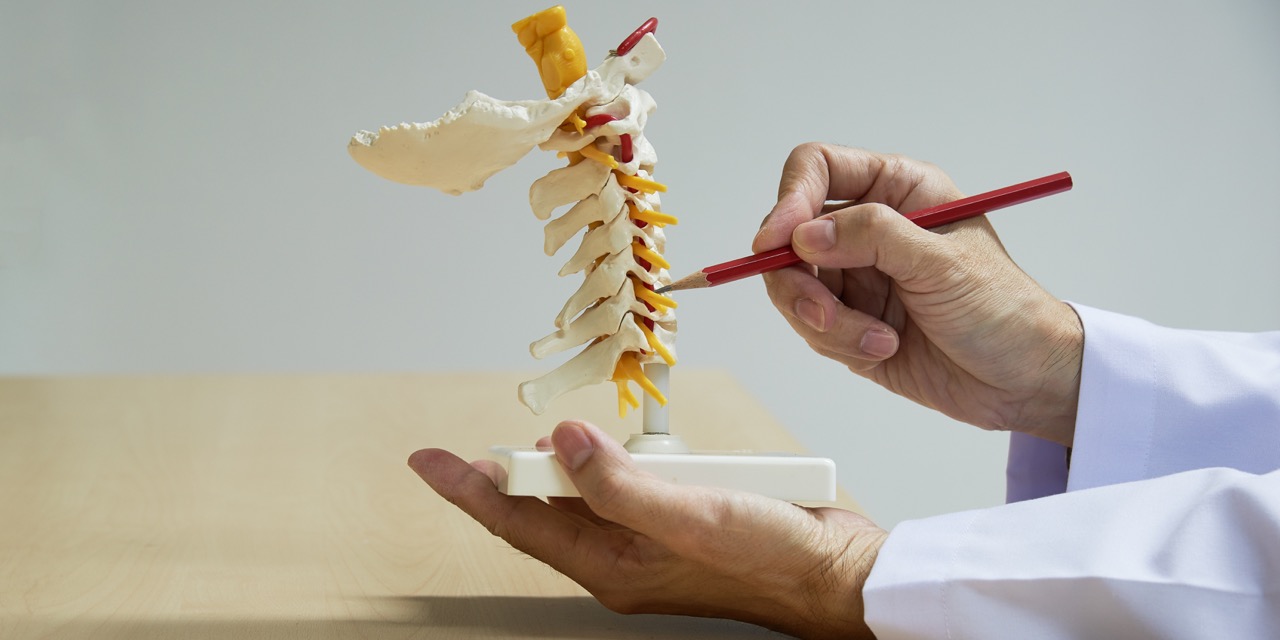
This pattern is especially common in athletes who have layered years of training on top of an old whiplash, concussion, or undetected upper cervical misalignment. The body has been compensating around a structural input that no one ever cleared.
Why training harder doesn't break it
The training response depends on the system's capacity to adapt. Adaptation requires the parasympathetic side of the autonomic system to be fully online during recovery. When the system stays sympathetic-dominant — because the structural input keeps signaling "stay ready" — the adaptation phase compresses.
You're training. You're not recovering. You plateau, and you stay there.
This is the ceiling. Self-regulation tools — breathwork, cold exposure, sleep protocols, sauna — all matter at the margin. None of them override the structural signal. When the hardware is sending the wrong message, the software optimizes around the wrong baseline.
How we work with athletes
Our patient list ranges from NFL, NBA, and Team USA athletes to weekend competitors and active parents. The clinical model is consistent across all of them: measure first, correct precisely, track the result.
We baseline every new patient with imaging plus HRV, sEMG, and thermography. The HRV trend gives us a moving picture of autonomic recovery across training cycles. The sEMG reveals chronic muscular guarding patterns that limit recruitment. The thermography shows asymmetries in autonomic regulation that often correlate with old injuries.
If the assessment indicates upper cervical involvement, we use Atlas Orthogonal — an instrument-based, imaging-calculated correction. We layer in Muscle Regen (AMIT) to release the muscular guarding patterns that have built up around the structural pattern.
When the structural input clears, motor unit recruitment improves measurably. Recovery between sessions shortens. The training response unlocks again.
The point
Volume, intensity, and nutrition matter. They aren't the ceiling.
If you've been training hard, recovering smart, and watching the results flatten, the bottleneck is probably upstream of the gym. Measure the signal. Then decide what to change.
If you've hit a plateau and the obvious levers haven't moved it, schedule an assessment. We baseline every new patient with imaging plus HRV, sEMG, and thermography before we recommend anything.