Migraines and the Upper Cervical Spine: A Mechanism-Level Explanation
A migraine is not just a bad headache.
For many patients, it is a full nervous-system event. Pain, light sensitivity, nausea, visual disturbance, neck stiffness, dizziness, fatigue, and brain fog can all show up in the same pattern.
That matters because the migraine conversation often gets reduced to one question: what medication will stop the pain?
Medication can be necessary. For some patients, it is essential.
But if the upper cervical spine is contributing to the system that produces the migraine pattern, pain control alone may not be enough.
The better question is:
Why is the nervous system producing this pattern in the first place?
The short answer
The upper cervical spine contributes to migraine patterns through its influence on neck mechanics, sensory input, muscle tension, balance, and pain-processing pathways near the brainstem. Unresolved upper cervical interference may contribute to persistent migraine patterns.
Why migraines are a nervous-system problem
Migraines involve complex neurological mechanisms. They can include vascular changes, altered pain processing, sensory sensitivity, inflammatory signaling, autonomic changes, and brainstem involvement.
That complexity is why migraine patients often feel dismissed.
They are told the scan is normal. Their labs are normal. Their pain is real, but nobody can explain why the pattern keeps happening.
The missing piece is often not a damaged structure. It is a dysregulated system.
A migraine can be understood as the nervous system losing tolerance. Light becomes too much. Sound becomes too much. Normal neck tension becomes amplified. Normal movement can trigger symptoms. Recovery takes longer than it should.
That is not weakness. It is reduced neurological capacity.
The upper cervical spine is not a side issue
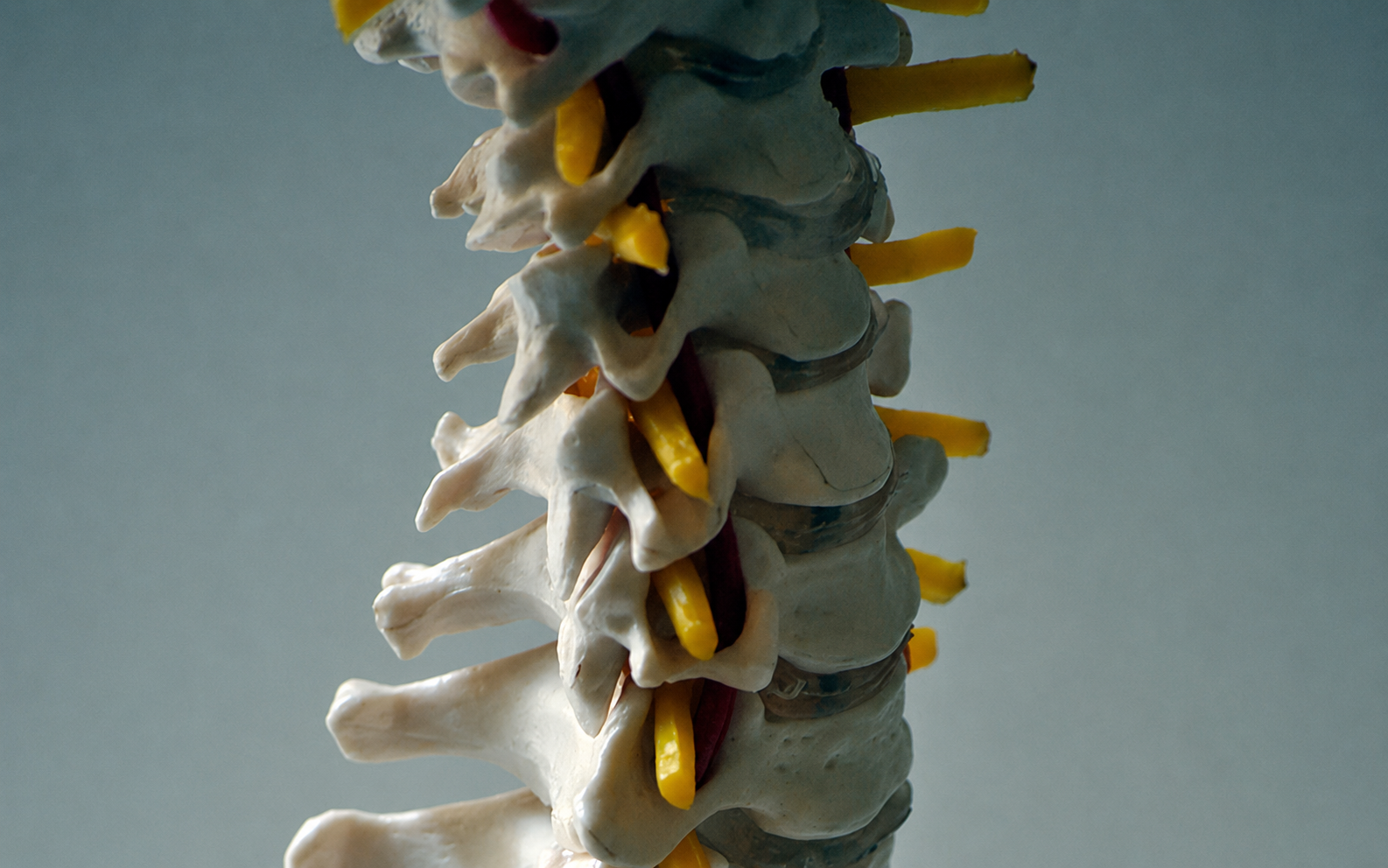
The atlas is the top vertebra in the spine. It sits directly beneath the skull and surrounds the transition point between the brainstem and spinal cord.
This region is dense with sensory input. The joints, ligaments, and muscles of the upper neck send information to the brain about head position, balance, movement, and tension.
When the atlas is misaligned or not moving correctly, the nervous system may receive distorted input from one of the most important structural regions in the body.
That can affect:
- neck muscle tone
- head posture
- jaw tension
- balance and vestibular input
- pain sensitivity
- cervicogenic headache patterns
- recovery from concussion or whiplash
This does not mean the atlas “causes” every migraine.
It means the atlas can be a significant contributor in certain migraine patterns, especially when migraine is paired with neck stiffness, jaw tension, dizziness, concussion history, or one-sided head and neck symptoms.
The pattern we look for at Foresight
At Foresight, we are especially interested in migraine patients who also report:
- neck stiffness before or after attacks
- pain that starts at the base of the skull
- jaw tension or TMJ symptoms
- dizziness or vertigo
- concussion or whiplash history
- one-sided head and neck symptoms
- poor sleep and high stress load
- migraines that became worse after trauma
- medication helps briefly but the pattern keeps returning
These clues suggest the migraine system may have structural and neurological inputs that deserve evaluation.
Why diagnostics matter
We do not want to guess from symptoms alone.
A comprehensive neurological assessment may include:
- upper cervical analysis
- postural and movement assessment
- HRV scanning
- Surface EMG
- Thermography
- history of trauma, concussion, dental work, jaw tension, or vestibular symptoms
The goal is to understand the pattern around the migraine, not just the migraine label.
If the body is showing asymmetrical muscle tension, autonomic stress patterns, poor recovery markers, and upper cervical interference, that changes the clinical picture.
What Atlas Orthogonal care is designed to do
Atlas Orthogonal care uses a precise, low-force instrument correction to address atlas misalignment.
The goal is not to crack the neck.
The goal is to correct structural interference at the top of the spine with as little force as possible, then watch how the nervous system responds.
For migraine patients, the intended clinical outcome is not simply pain relief. It is a change in the input that may be keeping the nervous system sensitized.
When the atlas is corrected, the system may receive clearer information from the upper cervical spine. For some patients, that can reduce the load feeding the migraine pattern.
What to do if your migraines keep coming back
If your migraines keep returning despite medication, supplements, sleep changes, hydration, or stress management, the issue may not be effort.
It may be that no one has evaluated the structural and nervous-system inputs feeding the pattern.
That is where Foresight starts.
We look at the upper cervical spine, the nervous system, and the way the body is adapting.
Because the migraine is the output.
The system is the question.
References
1. Rist PM, et al. The impact of spinal manipulation on migraine pain and disability: A systematic review and meta-analysis. Headache. 2019. https://pubmed.ncbi.nlm.nih.gov/30973196/
2. Posadzki P, et al. Spinal manipulations for migraine: An updated systematic review. Systematic Reviews. 2024. https://pubmed.ncbi.nlm.nih.gov/39614402/
3. Woodfield HC III, et al. Effect of atlas vertebrae realignment in subjects with migraine. Global Advances in Health and Medicine. 2015. https://pmc.ncbi.nlm.nih.gov/articles/PMC4689902/
4. Bronfort G, et al. Efficacy of spinal manipulation for chronic headache: A systematic review. J Manipulative Physiol Ther. 2001. https://pubmed.ncbi.nlm.nih.gov/11562654/