What Chronic Pain Is Really Telling You
Pain is not the enemy.
Pain is information.
The problem is that chronic pain often keeps speaking after the original injury should have healed. That is when people start to feel betrayed by their own body.
They stretch. They strengthen. They rest. They ice. They get massages. They take medication. They try to stay positive.
And the pain comes back.
That does not mean the body is broken.
It means the system is still protecting.
The short answer
Chronic pain is often a sign that the nervous system is still producing a protective response. Sometimes that response is driven by ongoing tissue irritation. Sometimes it is driven by altered pain processing, inflammation, poor recovery, stress physiology, or structural interference. The pain is real, but the cause may be system-level rather than only tissue-level.
Pain is an output, not just an input
Most people think pain works like a smoke alarm with a wire connected directly to damage.
Tissue is injured, pain turns on. Tissue heals, pain turns off.
That is true sometimes. It is not true all the time.
Pain is produced by the nervous system. The brain uses incoming information from the body, compares it against context, threat, memory, stress load, inflammation, movement, sleep, and prior injury, then decides whether pain is necessary for protection.
That means pain can persist even when tissue damage is no longer the main driver.
This does not make the pain imaginary.
It makes it neurological.
Why chronic pain feels so confusing
Acute pain usually makes sense.
You sprain an ankle. It hurts. You protect it. It heals.
Chronic pain is different. It can move, flare without warning, feel disproportionate, or respond well to one treatment for a few days before returning.
That pattern often means the body is not just reporting damage. It is reporting threat.
Threat can come from many places:
- mechanical stress
- joint dysfunction
- poor movement patterns
- inflammation
- sleep debt
- emotional stress
- fear of movement
- prior trauma
- autonomic dysregulation
- metabolic stress
- unresolved compensation after injury
The nervous system adds these signals together.
When the total load is too high, pain threshold drops.
Central sensitization
Central sensitization means the nervous system becomes more responsive to input. Normal signals can start to feel painful. Mild discomfort can become intense. A flare can last longer than expected.
This concept matters in chronic pain, but it is also overused.
Not every chronic pain patient has central sensitization. Research has challenged the idea that central sensitization is a defining feature of ordinary chronic idiopathic neck pain in all patients.
The more accurate position is this:
Some chronic pain involves heightened nervous-system sensitivity. Some chronic pain remains more mechanically driven. Many cases involve both.
That distinction matters because treatment should match the mechanism.
The structural piece most pain conversations miss
If pain is an output of the nervous system, then the quality of input matters.
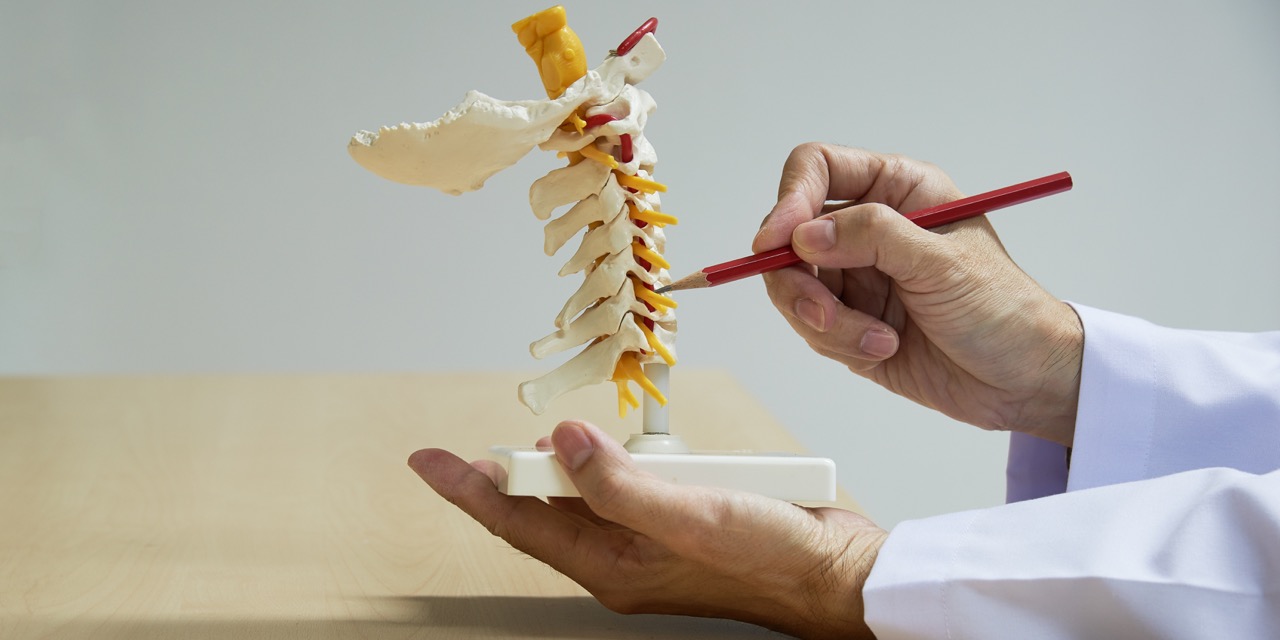
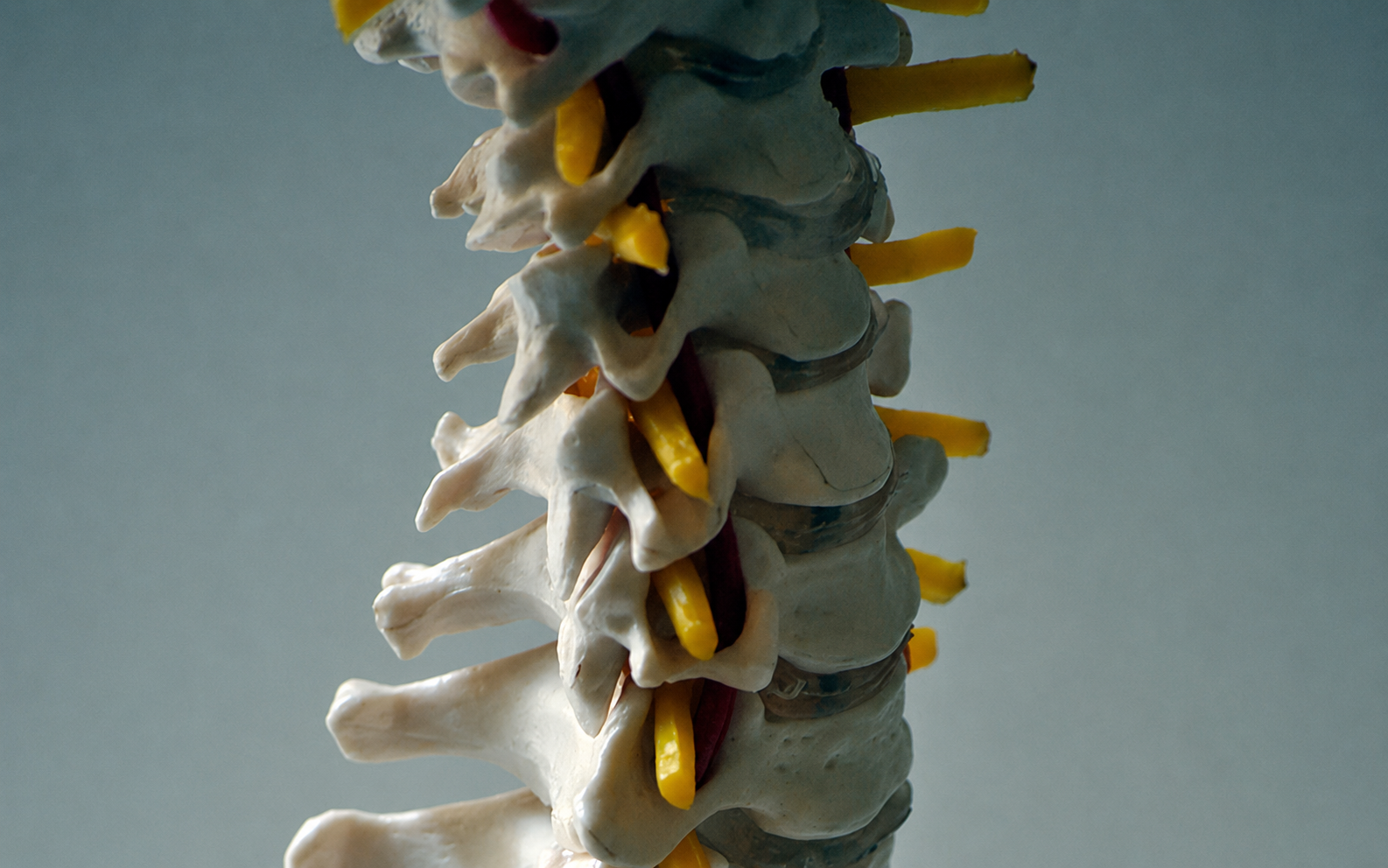
The spine sends constant sensory information to the brain. Joint motion, muscle tone, head position, posture, balance, and tension all shape the nervous system’s sense of safety.
When spinal mechanics are distorted, the body may adapt by increasing muscle guarding, changing movement patterns, altering load distribution, and keeping the system in a protective state.
This is especially important at the upper cervical spine.
The atlas sits at the top of the spine near the brainstem. Interference there can affect head posture, muscle tone, balance input, and downstream compensation patterns.
Again, this does not mean every pain pattern starts at C1.
It means that if the upper cervical spine is sending distorted input, the rest of the system may keep compensating.
Why treating the pain location often fails
The pain location is not always the problem location.
A shoulder may hurt because the neck is guarding. A low back may hurt because the pelvis is compensating. A hip may hurt because the foot is unstable. A headache may be driven by upper cervical tension. A jaw may clench because the neck is not stable.
The body does not organize by isolated parts. It organizes by patterns.
That is why chasing the sore spot can feel logical and still fail.
You can loosen the painful muscle, but if the nervous system still thinks that muscle needs to protect you, the tension returns.
You can strengthen the weak area, but if the body is inhibiting that muscle for a reason, the pattern comes back.
You can reduce inflammation, but if mechanical stress keeps triggering the same tissue, the inflammatory loop continues.
Pain is often the last output in a much longer chain.
What we look for at Foresight
When someone comes in with chronic pain, we are not only asking where it hurts.
We are asking:
- What pattern is the body protecting?
- Where is the system compensating?
- Is the upper cervical spine influencing global muscle tone?
- Is there asymmetrical tension on Surface EMG?
- Is HRV showing poor adaptability?
- Is Thermography showing autonomic asymmetry?
- Has the person had concussion, whiplash, falls, dental work, athletic injury, or chronic stress exposure?
- Does pain flare with stress, poor sleep, or certain postures?
This is how pain becomes more understandable.
Not because every answer is simple.
Because the pattern becomes visible.
The goal is not to silence pain. It is to change the signal.
Pain relief matters. No one should be expected to live in constant pain.
But if pain relief does not change the underlying signal, the body often returns to the same protective output.
That is why structural correction, nervous-system assessment, and muscle reactivation can matter.
The goal is to reduce the input that keeps the body on guard.
When the body no longer needs to protect, pain can change.
When chronic pain needs medical evaluation
Seek medical evaluation for pain that includes:
- unexplained weight loss
- fever or infection signs
- new weakness, numbness, or loss of coordination
- bowel or bladder changes
- pain after significant trauma
- cancer history
- severe night pain that does not change with position
- rapidly worsening symptoms
Chiropractic care can be part of a care plan, but serious symptoms need appropriate medical workup.
What chronic pain is asking you to investigate
Chronic pain is not always saying “something is damaged.”
Sometimes it is saying:
- the system does not feel safe
- the body is guarding
- the spine is sending distorted input
- inflammation is keeping the alarm sensitive
- recovery is not happening
- the nervous system has lost flexibility
That is not hopeless.
It is actionable.
Once you understand pain as a signal, the next step is to find the interference keeping that signal alive.