Sleep quality isn't a willpower problem. It's an autonomic process, and the state of your nervous system determines whether the process works.
Most sleep advice positions sleep as a behavior to optimize — bedroom temperature, screen time, magnesium, melatonin, sleep hygiene routines. All of that matters. The piece that's usually missing is that sleep is regulated by the same autonomic nervous system that determines heart rate variability, recovery from stress, and the capacity to downregulate at any time of day. If that system can't shift into parasympathetic dominance reliably, no amount of sleep hygiene fully fixes the problem.
What's actually happening when you sleep
Sleep is not a passive state. It's an active, autonomically-driven sequence that the nervous system has to orchestrate.
Sleep onset requires the system to shift from sympathetic (alert) to parasympathetic (rest) dominance. That shift is mediated by the vagus nerve and is reflected directly in heart rate variability. As you fall asleep, HRV rises, heart rate drops, breathing slows, and the system enters the first stage of non-REM sleep.
Through the night, the system cycles between deep non-REM sleep (parasympathetic-dominant, the recovery-heavy stage) and REM sleep (more autonomically variable, the cognitive consolidation stage). Each cycle is the autonomic system flexing between states. A healthy nervous system flexes through these cycles smoothly. A dysregulated one doesn't.
When sleep "feels light" or "doesn't restore," what's typically happening is that the autonomic system isn't fully accessing deep non-REM stages. The system is too activated to drop into parasympathetic dominance reliably. You're spending time in lighter stages instead of restorative ones. Duration of sleep stays the same; quality drops.
Why structural state matters
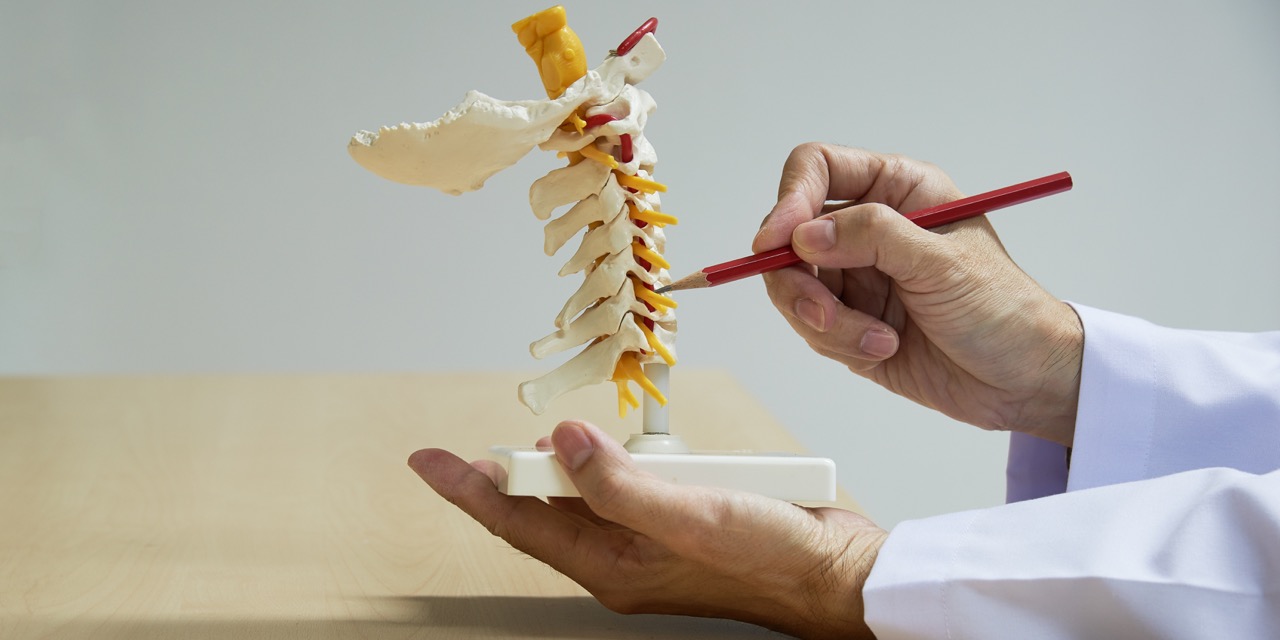
The upper cervical spine is densely innervated with autonomic-relevant pathways. The vagus nerve passes through this region. The sympathetic chain has cervical input. The brainstem, which orchestrates the autonomic shifts that drive sleep architecture, sits directly above the atlas.
When the structural environment of the upper cervical spine is disrupted — by chronic compensation, by misalignment, by prior trauma — the autonomic system that controls sleep has to operate against background interference. Sympathetic outflow stays elevated. Vagal tone stays compromised. The system that should be effortlessly shifting into parasympathetic dominance at night has to fight its way there.
The patient pattern we see in practice: longstanding sleep difficulty that doesn't respond to behavioral interventions, low HRV baseline, often a history of head or neck trauma, often current neck tension or pain. The sleep problem is a symptom of an upstream autonomic problem with a structural component.
In short: Sleep is autonomic. The shift into restorative sleep requires the nervous system to access parasympathetic dominance reliably. When structural interference in the upper cervical region keeps sympathetic activation elevated, sleep architecture suffers — even when sleep hygiene is otherwise dialed in.
Where this fits in the Human OS framework
In the Inputs → Interference → Output model, sleep occupies a unique position. It's both an output (poor sleep is a symptom of dysregulation) and a downstream input (recovery sleep feeds nervous system capacity for the next day).
When sleep quality drops, the next day's stress reactivity rises, autonomic capacity shrinks, and the pattern compounds. A sleep problem isn't an isolated issue. It's a feedback loop that touches every other regulatory system.
Addressing sleep typically requires addressing what's preventing the autonomic shift. Sometimes that's behavioral (cognitive load, evening stimulation, alcohol, late caffeine). Sometimes it's metabolic (inflammation, blood glucose instability, sleep apnea). Sometimes it's structural — and structural drivers are the category most often missed.
What we see in clinical practice
The patients who come in primarily for sleep problems usually have other symptoms too: low HRV on assessment, sympathetic asymmetry on thermography, persistent neck or shoulder tension, often a history of concussion or whiplash.
The pattern responds to structural correction in a specific way. Sleep doesn't fix overnight. The autonomic system has to integrate the new structural input over weeks. What we typically see is HRV rising across visits, paralleled by patients reporting that they're falling asleep faster, waking less often, and waking up feeling more restored.
If a patient is doing the right behavioral work, has been seen for sleep medicine workup (ruling out apnea or other primary sleep disorders), and is still struggling, the structural assessment frequently catches the missing piece.
When sleep isn't a structural problem
Not all sleep problems are upstream of structural issues. Common alternative drivers we screen for:
Sleep apnea. If you snore, wake gasping, or have witnessed apneas, sleep medicine evaluation is the first step before chiropractic work. A CPAP-treated apnea patient who still has sleep problems may then be a candidate for structural assessment.
Restless legs syndrome. Iron deficiency, dopaminergic issues, and primary RLS need to be worked up by sleep medicine or neurology.
Severe anxiety or PTSD. Trauma-informed therapy and, when appropriate, psychiatric care are primary. Structural work supports but doesn't replace that work.
Medication effects. Many common medications (SSRIs, stimulants, beta-blockers, steroids) disrupt sleep architecture independent of structural or behavioral factors.
The structural assessment captures one piece of a multi-factor picture. When the structural component is real, it's often the biggest unaddressed lever. When it's not the driver, we'll tell you and point you toward what is.
Schedule your assessment
If sleep has been a problem for months or years and the usual interventions haven't moved the needle, the structural assessment is the piece that's usually missing from the workup. The first visit is a consultation, full assessment, and upper cervical x-rays. HRV measurement is part of every visit, and the trend across visits is one of the clearest indicators of whether your sleep system is reorganizing.
Schedule Your Assessment Today.
References
1. Tobaldini E, Costantino G, Solbiati M, et al. Heart rate variability in normal and pathological sleep. *Frontiers in Physiology.* 2013;4:294. doi:10.3389/fphys.2013.00294
2. Trinder J, Waloszek J, Woods MJ, Jordan AS. Sleep and cardiovascular regulation. *Pflugers Archiv: European Journal of Physiology.* 2012;463(1):161-168. doi:10.1007/s00424-011-1041-3
3. Buysse DJ. Sleep health: can we define it? Does it matter? *Sleep.* 2014;37(1):9-17. doi:10.5665/sleep.3298